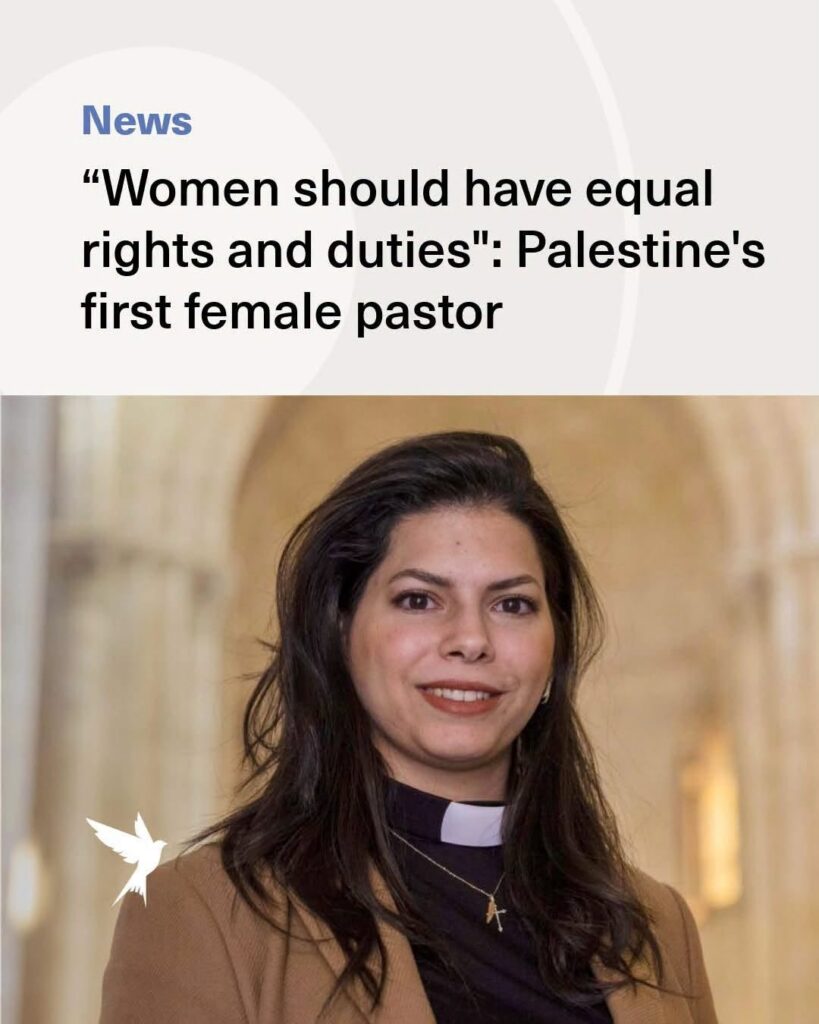
In a historic ceremony that drew global attention, Rev. Sally Azar was ordained on January 22, 2023, as the first female Palestinian pastor in the Evangelical Lutheran Church in Jordan and the Holy Land (ELCJHL). The event, held at the Church of the Redeemer in Jerusalem, marked a significant step forward for women’s roles in religious leadership within the Palestinian Christian community and the broader Middle East.
Azar, the daughter of Bishop Sani Ibrahim Azar, was ordained by her father in front of family, church leaders, and international guests. Her ordination came after the ELCJHL synod approved the ordination of women in 2006, but societal and communal acceptance took additional time to build. A dedicated Women’s Desk established in 2008 helped prepare congregations by promoting discussions on gender equality in the church and society.
Background and Early Life
Born in 1996 in Jerusalem, Sally Azar is the middle child of Bishop Sani Azar and Nahla Azar. Growing up in a pastoral family, she witnessed her father’s ministry firsthand, which inspired her own calling. She pursued theological studies, including intercultural theology at the University of Göttingen in Germany, and has served as a Council member of the Lutheran World Federation (LWF).
Her path reflects a deep personal commitment shaped by her upbringing. In interviews, Azar has shared that she never questioned women’s ability to serve as pastors, describing how growing up watching her father’s ministry showed her the value of women holding equal roles and responsibilities in the community.
A Message of Equality
Azar has been vocal about the challenges women face in both church and society, stressing in conversations with media outlets the importance of affirming women’s equality. She has acknowledged that acceptance of female pastors has not been uniform, noting that resistance to a woman pastor often stemmed from communities accustomed to seeing men in positions of power. Interestingly, she has observed that pushback often came more from women in the congregations than from men, underscoring the need for continued education and dialogue on gender roles.
Her ministry sends a powerful message of acceptance and progress in the church’s journey toward gender justice, according to the Lutheran World Federation.
Reactions and Broader Impact
The ordination was celebrated widely across Christian denominations and international organizations. Leaders from the World Council of Churches, the Evangelical Lutheran Church in America, and other bodies praised the milestone. It was seen as inspirational not only for Palestinian women but for women in conservative religious contexts across the region.
Pastor Niveen Sarras, another Palestinian Lutheran pastor based in the United States, expressed joy mixed with reflection, describing the moment as a source of happiness and hope that it would open doors for other women, particularly those with fewer opportunities.
As of 2026, Azar continues her ministry and has participated in international forums, including the DW Global Media Forum, where she represents progressive voices within Palestinian Christianity.
Context in the Holy Land
The ELCJHL, one of the smallest Lutheran denominations, serves Palestinian Christians in the West Bank, Israel, and Jordan. Christians form a small minority in the region, and issues of equality, peace, and community resilience are central to their witness.
Azar’s achievement comes amid ongoing discussions about women’s rights in Palestinian society and the Middle East. Her emphasis on equal rights and duties aligns with broader movements for gender equity while remaining rooted in Christian theology and local traditions.
Looking Ahead
Rev. Sally Azar’s ordination is more than a personal milestone — it represents hope for greater inclusion and shared leadership in the church. As she continues her pastoral work, her message remains clear: women and men are called to serve equally in building compassionate, just communities.
Her journey reflects faith in progress: a belief that barriers can be overcome when communities embrace the full gifts of all their members. Her story is already inspiring young women across the Holy Land and beyond to pursue their callings without limitation.
This article draws on reports from the Lutheran World Federation, Embrace the Middle East, Living Lutheran, and interviews with Azar.