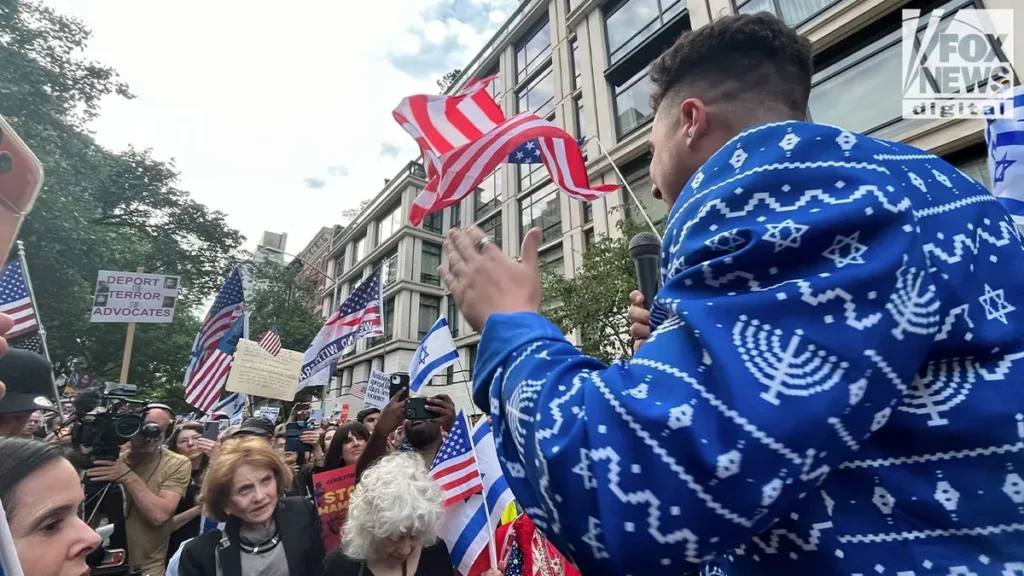
The electoral successes of candidates backed by New York City Mayor Zohran Mamdani — and aligned with his democratic socialist, strongly pro-Palestinian platform — are generating significant alarm among substantial segments of the American public, particularly Jewish communities, pro-Israel advocates, moderate Democrats, and those worried about rising antisemitism and shifts in U.S. foreign policy.
While supporters frame these wins as a victory for economic populism and Palestinian human rights advocacy, critics argue that the “Mamdani wing” normalizes rhetoric and policies widely viewed as crossing into anti-Israel extremism or enabling antisemitism — raising questions about the Democratic Party’s direction and domestic cohesion.
Who Is Zohran Mamdani?
Zohran Kwame Mamdani
Ugandan-born, naturalized U.S. citizen of Indian descent and practicing Shia Muslim. Rose as a Democratic Socialists of America (DSA) member. Won the 2025 NYC Democratic mayoral primary on a platform of affordability, housing, and taxes on the wealthy — while maintaining a long record of vocal criticism of Israeli government policies.
📋 Key Positions on Israel and Related Issues
Has described Israel’s actions in Gaza as “genocide.”
Supports the Boycott, Divestment, and Sanctions (BDS) movement against Israel.
States Israel has a right to exist but emphasizes “a state with equal rights” rather than explicitly affirming it as a Jewish state.
Pledged to order the arrest of Israeli PM Benjamin Netanyahu during any visit to New York City, citing International Criminal Court warrants.
Flashpoints Fueling Controversy
Several positions and statements have drawn sharp rebukes from Jewish organizations, moderate Democrats, and pro-Israel leaders:
🚨 “Globalize the Intifada”
Mamdani initially refused to condemn the slogan — widely interpreted by Jewish groups as a call to extend violence against Jews worldwide. He described it as a misunderstood call for equality, later saying he would “discourage” its use but does not “police language.” The ADL and American Jewish Committee condemned this stance explicitly.
🚨 Criticism of AIPAC and Pro-Israel Groups
He has referred to AIPAC and similar organizations in terms including “monster” moving “dark money” — prompting accusations from Jewish leaders of invoking antisemitic tropes about Jewish power and influence.
🚨 Broader Associations
Past support for Students for Justice in Palestine, a rap song referencing individuals convicted of aiding Hamas, and consistent framing of the conflict have led prominent Jewish elected officials and organizations to accuse him of antisemitism or of delegitimizing Israel and endangering Jewish safety.
Mamdani and his supporters counter that his criticism targets Israeli government policies and the occupation — not Jews or Judaism. He has repeatedly condemned antisemitism, highlighted rising hate crimes against Jews since October 7, 2023, and pledged increased funding for anti-hate programs. Some analyses note that attacks labeling him an “Islamist extremist” or linking him directly to groups like the Muslim Brotherhood conflate his Muslim identity and anti-Zionism with religious radicalism — claims disputed by fact-checks that describe him as a secular progressive socialist.
June 2026 Primary Wins — Alarm Amplified
In the June 2026 New York congressional primaries, three Mamdani-endorsed candidates — democratic socialists and progressives sharply critical of Israel — defeated incumbents. Notably, they ousted Rep. Dan Goldman, a Jewish moderate. Mamdani actively campaigned for each.
“This signals a broader leftward shift that could marginalize strong Israel supporters within the Democratic Party and provide ammunition for Republican attacks in general elections.”
— Pro-Israel Democratic leaders, following the June 2026 primary resultsModerate House Democrats voiced private anxiety about the “Mamdani wing” complicating efforts to flip seats and exposing the party to charges of radicalism. Republicans are already signaling they will highlight these dynamics prominently in upcoming races.
Widespread Concerns Among U.S. Citizens
Many Americans — especially the large Jewish community in New York and nationwide, along with bipartisan pro-Israel voices — see these developments as deeply troubling across four key dimensions:
🕍 Antisemitism Surge
The U.S. has seen documented rises in antisemitic incidents since October 2023. Critics fear that high-profile platforms refusing to firmly reject slogans like “globalize the intifada” — or using inflammatory language against pro-Israel groups — normalizes hostility that can spill into violence against Jews.
🇺🇸 Party and Policy Shift
Historically strong bipartisan U.S. support for Israel faces strain if one major party increasingly elevates voices viewing Israel through a “genocide” lens or prioritizing BDS-style measures — affecting aid, diplomacy, and the U.S.-Israel alliance.
🔴 “Red-Green” Alliance Fears
Some analysts describe an emerging fusion of far-left socialism and radical anti-Zionist elements. While mainstream sources often reject blanket “Islamist” labels as overstated, the perception fuels concerns among citizens worried about ideological shifts in major cities and national politics.
🏙️ Domestic Cohesion
In a city with the largest Jewish population outside Israel, many residents and observers worry about heightened tensions, safety for Jewish New Yorkers, and the precedent set for other major urban centers across the country.
A Democratic Party at a Crossroads
Jewish voters in the mayoral race split, with a majority favoring more moderate options in exit polling, though Mamdani secured notable support. Prominent rabbis and organizations urged opposition to his candidacy over Israel-related positions.
The primary results underscore deepening fractures within the Democratic Party between its progressive base — energized by figures like Mamdani on issues of inequality, housing, and foreign policy — and moderates plus traditional allies concerned about electability and core values.
For many U.S. citizens — especially those who view strong U.S.-Israel ties and robust opposition to antisemitism as non-negotiable — the gains of Mamdani-style politics represent more than policy disagreement. They signal a troubling trajectory that demands scrutiny and pushback to protect both domestic harmony and longstanding alliances.
This remains a fast-evolving story. Jewish organizations, Democratic strategists, and political analysts continue to debate the implications as the 2026 midterm cycle approaches.
RIU Special Report
This is a special report by the Rooted in Unity editorial team. Rooted in Unity is a Houston, Texas–based initiative dedicated to dialogue, civic engagement, and principled advocacy across faith communities and national boundaries. This report presents multiple perspectives and does not constitute an endorsement of any political candidate or party.