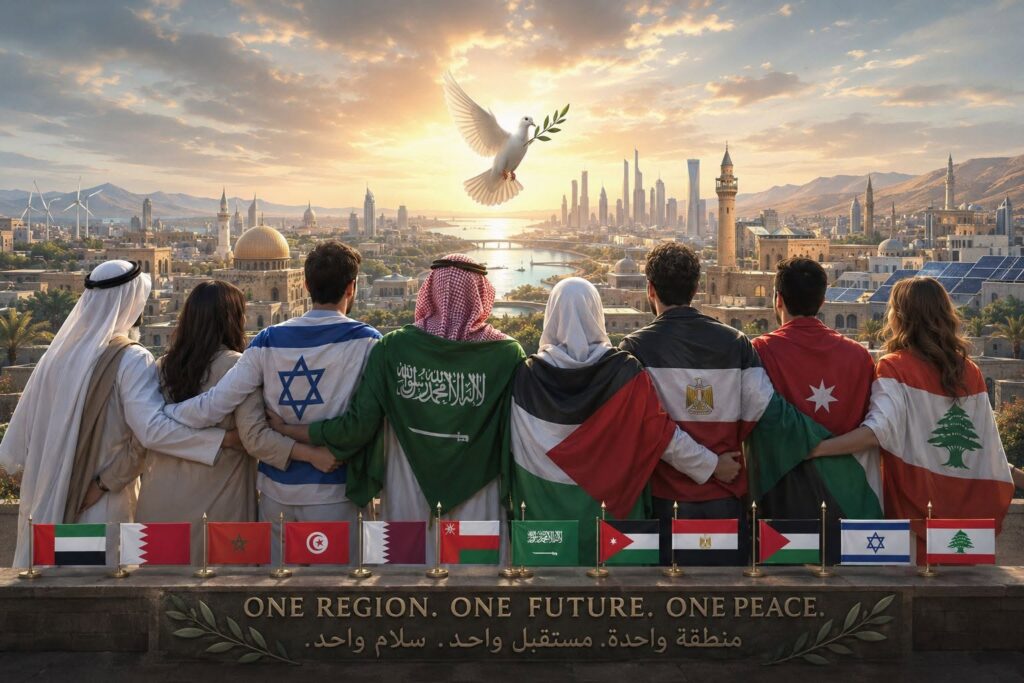
“The real challenge is not achieving a military victory for one side over the other — but building a strategic vision that makes peace a shared interest for all the peoples of the region.”
In a moment when the Middle East remains caught between cycles of conflict and the mirage of military solutions, Motaz Mohammed Almansi — a Palestinian writer and voice for regional reconciliation — offers something rarer than a ceasefire proposal: a vision. One grounded not in the logic of winners and losers, but in the recognition that the futures of Palestinians, Israelis, and the wider Arab world are deeply and inescapably interconnected.
The Conflict Harms Everyone — Including Opportunity
Almansi opens with a frank assessment that cuts across the familiar narratives. The continuation of the Palestinian-Israeli conflict does not only cause suffering to the people directly involved. It actively deprives the entire region of enormous opportunities — for development, for stability, and for prosperity that remains out of reach as long as the conflict endures.
“The continuation of this conflict harms not only Palestinians and Israelis, but also deprives the entire region of enormous opportunities for development, stability, and prosperity.”
— Motaz Mohammed AlmansiThis framing is itself significant. Rather than arguing for peace on purely moral grounds — or from the position of one side’s interests — Almansi makes a strategic case: that conflict is expensive for everyone, and that the logic of domination is ultimately self-defeating even for those who believe they are winning.
A Middle East Built on Partnership and Integration
Almansi is direct about what he does and does not believe in. He does not believe in a Middle East built on domination or exclusion. What he believes in is a new Middle East — one founded on partnership, integration, and cooperation.
His core argument: Stability is not a gain for one side and a loss for another — it is a benefit for everyone. The futures of Palestinians, Israelis, and the wider Arab world are not zero-sum. They are deeply interconnected. A region that prospers together is more secure than one where one side’s victory is another side’s humiliation.
Arab World Resources
Capital, land, energy, and a vast human population — the Arab world brings foundational assets to any regional integration framework.
Israeli Expertise
Technological innovation, agricultural science, medical research, and start-up culture — expertise that could benefit the entire region under conditions of genuine peace.
Strategic Location
The Middle East sits at the crossroads of three continents. Under peace, its geographic position could make it one of the world’s leading centers of trade, innovation, and growth.
“I believe that establishing a strong regional framework, led by the region’s principal powers, could open the door to an unprecedented era of development, scientific progress, technological innovation, and economic growth.”
— Motaz Mohammed AlmansiShaped by Its Peoples — Not by Conflicts Imposed Upon Them
Almansi’s vision culminates in a declaration about agency. The Middle East he believes in is one shaped by its own peoples — not by conflicts imposed upon them from outside, not by geopolitical competition among great powers, and not by the accumulated weight of historical grievances that hold entire generations prisoner.
“This is the Middle East I believe in: a Middle East shaped by its peoples, not by conflicts imposed upon them; a Middle East built on shared interests instead of hatred, on cooperation instead of war, and on a common future instead of remaining prisoners of the past.”
— Motaz Mohammed AlmansiIt is in this context that Almansi connects his vision to the World Abrahamic Movement — a global interfaith initiative spreading rapidly across Arab, Turkish, Iranian, and Israeli media, generating both enthusiasm and controversy. The movement’s premise — that the shared Abrahamic heritage of Islam, Judaism, and Christianity provides a foundation for cooperation rather than conflict — resonates directly with the regional partnership Almansi envisions.
Join the First Global Abrahamic Summit — June 29
As Almansi’s vision circulates, the World Abrahamic Movement is opening its doors to the world through its first Orientation Conference — a digital global summit via Zoom, free and open to all, designed to explain the movement, answer the questions flooding in daily, and invite participation from activists and curious minds worldwide.
Summit Speakers
Tom Wegner
Founder & Executive Director, International Abrahamic Movement
Soraya Deen
Founder, Bureau of Muslim Speakers in the United States · VP for Training & Guidance, World Abrahamic Movement
Aviv Beilis Lerner
VP of Regional Partnerships & Development, Global Abrahamic Movement
Majd Jbaily
Special Envoy of the World Abrahamic Movement to the Alawi Community
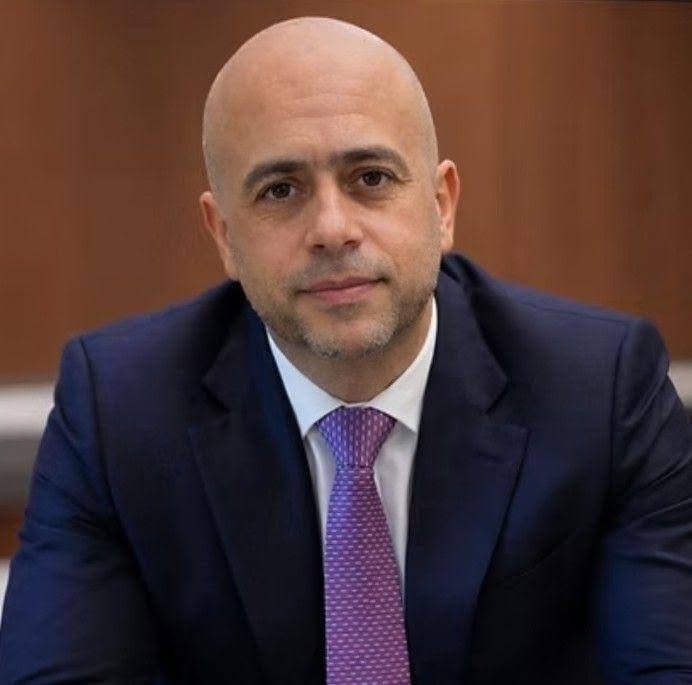
Motaz Mohammed Almansi
Motaz Mohammed Almansi is a Palestinian writer and advocate who believes the futures of Palestinians, Israelis, and the wider Arab world are deeply interconnected — and that the path to prosperity runs through partnership, not domination. He writes to build the kind of regional vision that political leaders have yet to articulate.
Follow on Facebook →