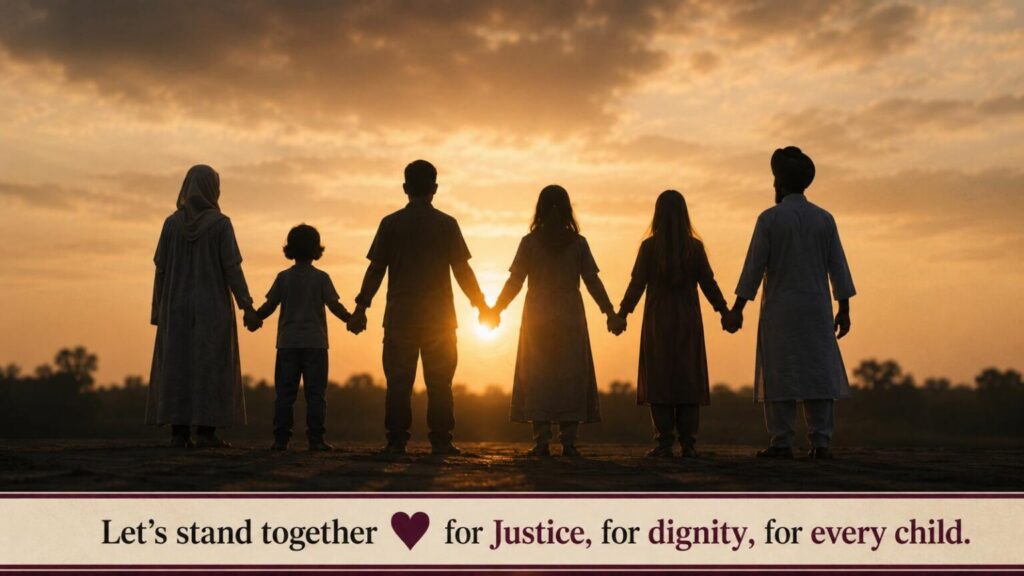
When one child suffers, all humanity is wounded. As people of faith, we are called to embody our prayers through active solidarity with the most vulnerable communities, irrespective of faith differences. Justice must never depend on the religion of the victim.
Two Children. One Nation’s Conscience.
A few months ago, Pakistan mourned the heartbreaking death of an eight-year-old Christian girl who was fatally attacked by stray dogs in the middle of a public street. As people watched helplessly, no one reached her in time to save her life. Christian leaders rightly raised their voices, calling for justice and greater protection for vulnerable religious minorities. Their response reflected a fundamental conviction shared by every faith tradition: every human life is sacred, and every child deserves protection.
Seven-year-old Muntaha, a Muslim child, walked only a few steps from her home before she fell into the hands — not of stray dogs, but of human predators. She was raped, brutally tortured, murdered, and her lifeless body was returned to her family in a sack.
Her name, Muntaha, means purity, excellence, and drawing near to the Divine. Like every parent, her family dreamed of a future filled with hope and promise. Those dreams were brutally stolen.
These two tragedies are different in circumstance, yet they ask us the same question:
“Will our compassion depend on the religion of the victim, or on the sacred value of every human life?”
— Rev. Dr. Khushnud AzariahThe Equality of Every Child’s Worth
If we truly believe that every person is created with God-given dignity, then our response cannot be selective. A Christian child, a Muslim child, a Hindu child, a Sikh child — each bears immeasurable worth. Violence against one child is violence against every child. Injustice against one community diminishes the humanity of us all.
Muntaha’s story must not become just another headline that fades from public memory. Her story should awaken us. It should compel us to ask why such brutality continues in a society where religion occupies such a central place in public life.
The problem is not our religions — but our failure to embody their deepest moral teachings.
We pray, worship, and profess faith, yet too often remain silent when the vulnerable cry for justice. We have tolerated corruption, weakened the rule of law, normalized violence, and become accustomed to indifference. Every major faith tradition teaches that justice, mercy, and the protection of the weak are sacred responsibilities. Faith is not measured merely by prayers, rituals, or religious slogans.
“A faith that is loud in words yet empty in action fails both God and humanity. Faith becomes authentic only when it is lived through courageous love, compassionate action, and unwavering commitment to justice.”
— Rev. Dr. Khushnud AzariahA Call to Every Pakistani
This is the appeal Rev. Dr. Azariah extends to every Pakistani — Christian, Muslim, Hindu, Sikh, and all people of goodwill. Not a call to tolerance alone, but to active, visible, cross-faith solidarity:
🤝 The Solidarity We Must Choose
Refusing Selective Compassion
Rev. Dr. Azariah makes a moral demand that is as straightforward as it is challenging: reject the temptation to see suffering through the narrow lens of religious identity. Instead, embody faith in active solidarity with the most vulnerable communities, irrespective of faith differences.
The call is not to abandon religious identity but to fulfill it. Every faith that claims to honor God while looking away from a murdered child stands condemned by its own teachings. The path forward requires strengthening the rule of law, protecting every child, defending the dignity of every woman, and refusing to allow violence to become the accepted language of society.
“May God grant us the courage to speak when others remain silent, to stand where others turn away, and to build a Pakistan where every child — regardless of religion, ethnicity, or social status — can live in safety, dignity, and hope.”
— Rev. Dr. Khushnud Azariah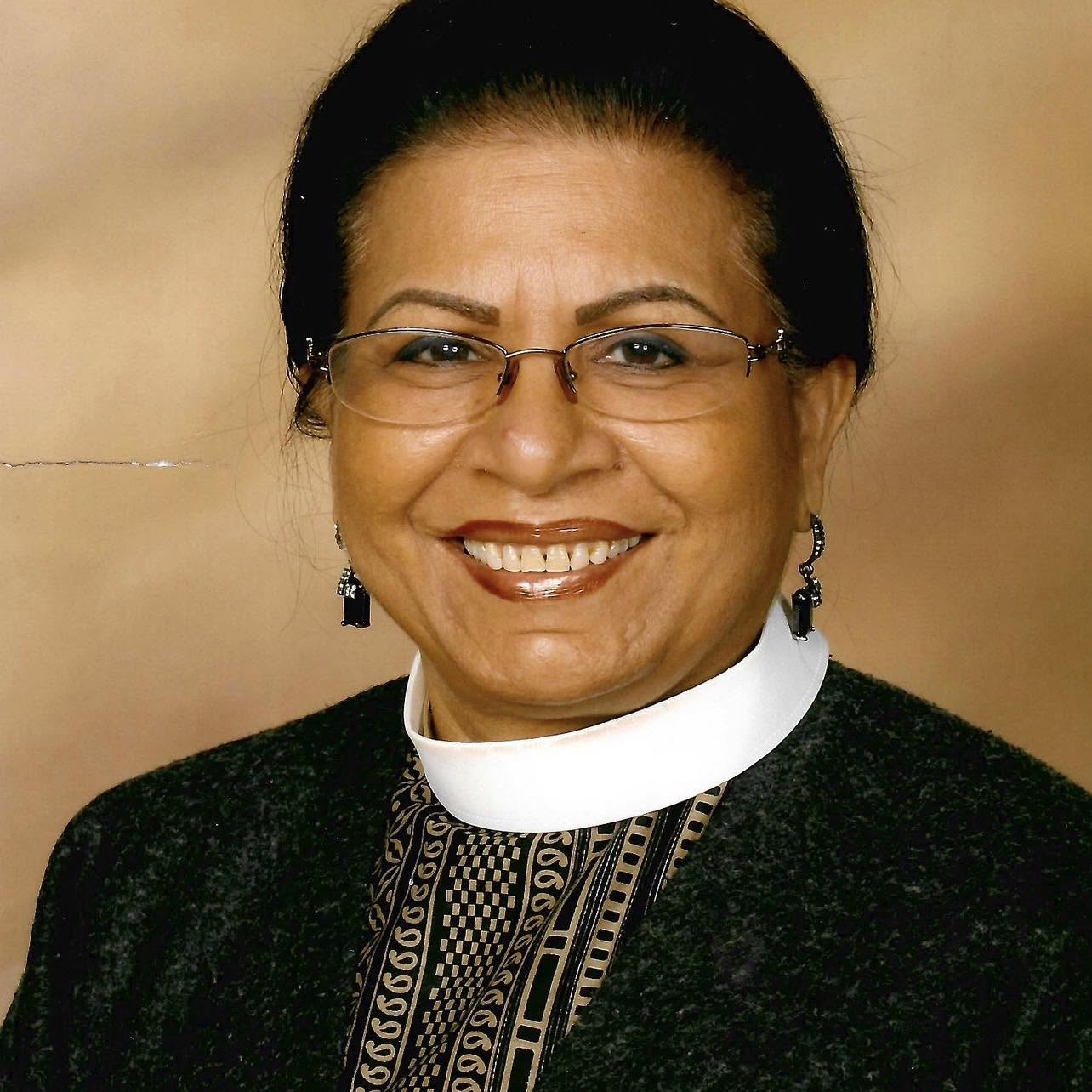
Rev. Dr. Khushnud Azariah
Rev. Dr. Khushnud Azariah is a pioneering figure in Pakistan’s history — the first woman to study theology and to be ordained as a Priest. A theologian, pastor, and advocate for justice, she writes at the intersection of faith, human dignity, and interfaith solidarity. Her voice has been one of Pakistan’s most consistent and courageous in calling the Church and civil society toward cross-faith justice.
Visit khushnud-azariah.com →