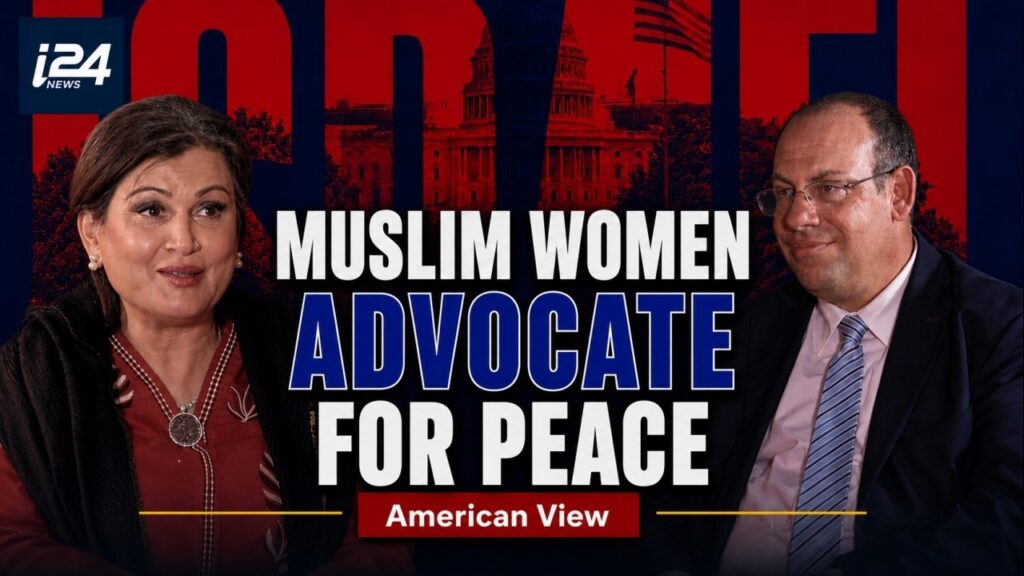
Anila Ali on Rebuilding Muslim-Jewish Alliances After October 7
Anila Ali on Rebuilding Muslim-Jewish Alliances After October 7
In a wide-ranging conversation on American View with host Mike Wagenheim, AMMWEC President Anila Ali traces her organization’s roots from post-9/11 disillusionment to a growing multifaith coalition standing against antisemitism.
American View with Mike Wagenheim Watch on YouTube →
The aftermath of Hamas’s October 7 massacre tested many of the alliances American Jewish organizations had spent years building with other minority communities — but new partnerships are emerging too, including with a Muslim organization advocating not only solidarity with Jews, but a deeper peace with Israel. That was the focus of a recent episode of American View, where host Mike Wagenheim sat down with Anila Ali of the American Muslim and Multifaith Women’s Empowerment Council (AMMWEC).
Ali traced the origins of her work back to the aftermath of September 11, describing how, as a young mother who had recently moved to the United States, she began hearing rhetoric in her local Southern California mosque that blamed America — and eventually the Jewish community — for the attacks. Having grown up in Pakistan without encountering that kind of hostility, she said the experience revealed an agenda within some American Muslim organizations that troubled her deeply.
Founding a Muslim Women’s Civil Rights Movement
Ali described founding AMMWEC in 2011 as, in her words, the first Muslim women’s civil rights movement in the United States — a response to what she described as recurring misogyny within existing Muslim civil rights organizations, where women were often expected to take a back seat. Drawing on a family history that includes South Asian women leaders, she said she pushed back against being sidelined and worked to get women elected to mosque boards, an effort she says was often met with silencing.
“This is not Islam. This is not our culture.” — Anila Ali, recalling her father’s teaching on Abrahamic unity
Early Interfaith Bridge-Building
In the organization’s early years, Ali said AMMWEC built close relationships with Jewish organizations including ADL chapters in California and New York, and hosted large interfaith iftars at synagogues that drew crowds too big to fit inside. She described the period as one of genuine trust-building between Muslim and Jewish communities, work that would later be tested by a shift in the political climate.
Confronting Rising Antisemitism
Ali said the tone shifted noticeably after 2015, as questions about Israel’s right to exist increasingly surfaced in sermons and private conversations. She pointed to the election of certain outspoken members of Congress as a turning point, saying rhetoric she once heard only behind closed doors became normalized in public discourse — and that women in her own organization who spoke out against antisemitism faced harassment and intimidation.
Key Points From the Interview
- AMMWEC was founded in 2011, which Ali describes as the first Muslim women’s civil rights movement in the U.S.
- Ali says her organization partnered early with ADL chapters and Jewish rabbis on interfaith programming.
- She says AMMWEC members faced harassment and boycotts from some Muslim civil rights organizations over their pro-coexistence stance.
- Ali led what she describes as the first Muslim delegation to march in New York’s Israel Day Parade.
- AMMWEC’s Washington, D.C. conference grew from about 35 organizations last year to more than 70 this year, spanning Muslim, Jewish, Christian, Sikh, and Hindu groups.
- Ali says the coalition includes participants from both major U.S. political parties.
Marching in the Israel Day Parade
Ali described leading a Muslim delegation in the Israel Day Parade amid a tense political climate as one of the most moving experiences of her advocacy work, recalling Jewish New Yorkers of multiple generations thanking the delegation along the route. She said the moment reinforced her belief that Muslim and Jewish communities need each other, recalling how Jewish organizations, including ADL, supported Muslim Americans who faced discrimination after 9/11.
“We’re stronger together.” — Anila Ali, on Muslim-Jewish solidarity
A Growing Coalition
Asked about AMMWEC’s second annual Washington, D.C. conference, Ali said the event nearly tripled in size year over year, drawing more than 70 organizations spanning multiple faiths and political affiliations. She said the growth reflects renewed appetite for coalition-building across religious and partisan lines, even as some established Islamic organizations have distanced themselves from AMMWEC’s interfaith work.
Ali closed the conversation with an open invitation, saying any American organization interested in joining AMMWEC’s Abrahamic coalition is welcome to reach out and get involved.
Watch the Full Interview
American View with Mike Wagenheim, featuring AMMWEC President Anila Ali
Watch on YouTube →
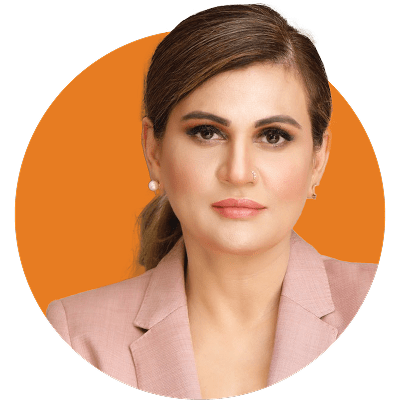
Anila Ali
Anila Ali is a civil rights advocate and educator who heads the American Muslim and Multifaith Women Empowerment Council (AMMWEC). Her work seeks to empower female leadership, promote religious freedom, and counter violent extremism.