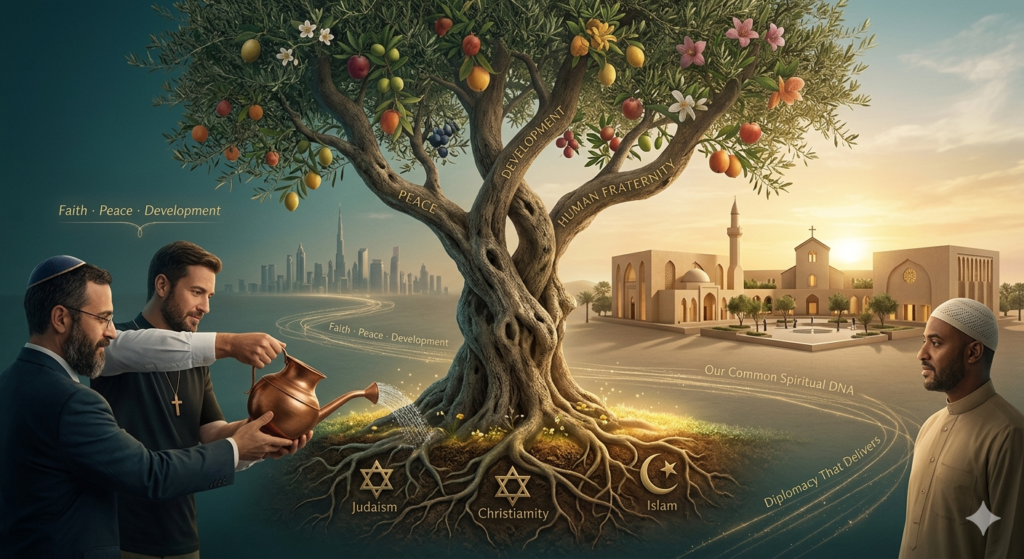
In a world often divided by politics, borders, and misunderstandings, a quiet but powerful revolution is unfolding. It draws strength not from erasing differences, but from celebrating a profound shared heritage. The Abrahamic Movement—rooted in the common lineage of Judaism, Christianity, and Islam through the patriarch Abraham (Ibrahim)—offers a hopeful path: faiths uniting for lasting peace and meaningful development across the globe.
Our Common Spiritual DNA
Judaism, Christianity, and Islam share far more than most realize. These are not superficial similarities — they form a powerful ethical foundation for joint action on humanity’s greatest challenges.
Lessons from History: When We Flourished Together
History proves this unity is not naive idealism. During the Golden Age of Al-Andalus (Islamic Spain) and the Abbasid era in Baghdad, Muslim, Jewish, and Christian scholars worked side-by-side. They translated ancient texts, advanced mathematics, medicine, astronomy, and philosophy. Figures like Maimonides — a Jewish thinker deeply respected in Islamic tradition — and Averroes exemplified cross-pollination that benefited all civilizations.
These periods of coexistence produced extraordinary human flourishing. They remind us that when Abrahamic communities engage with mutual respect, everyone wins.
The Abraham Accords: Diplomacy That Delivers
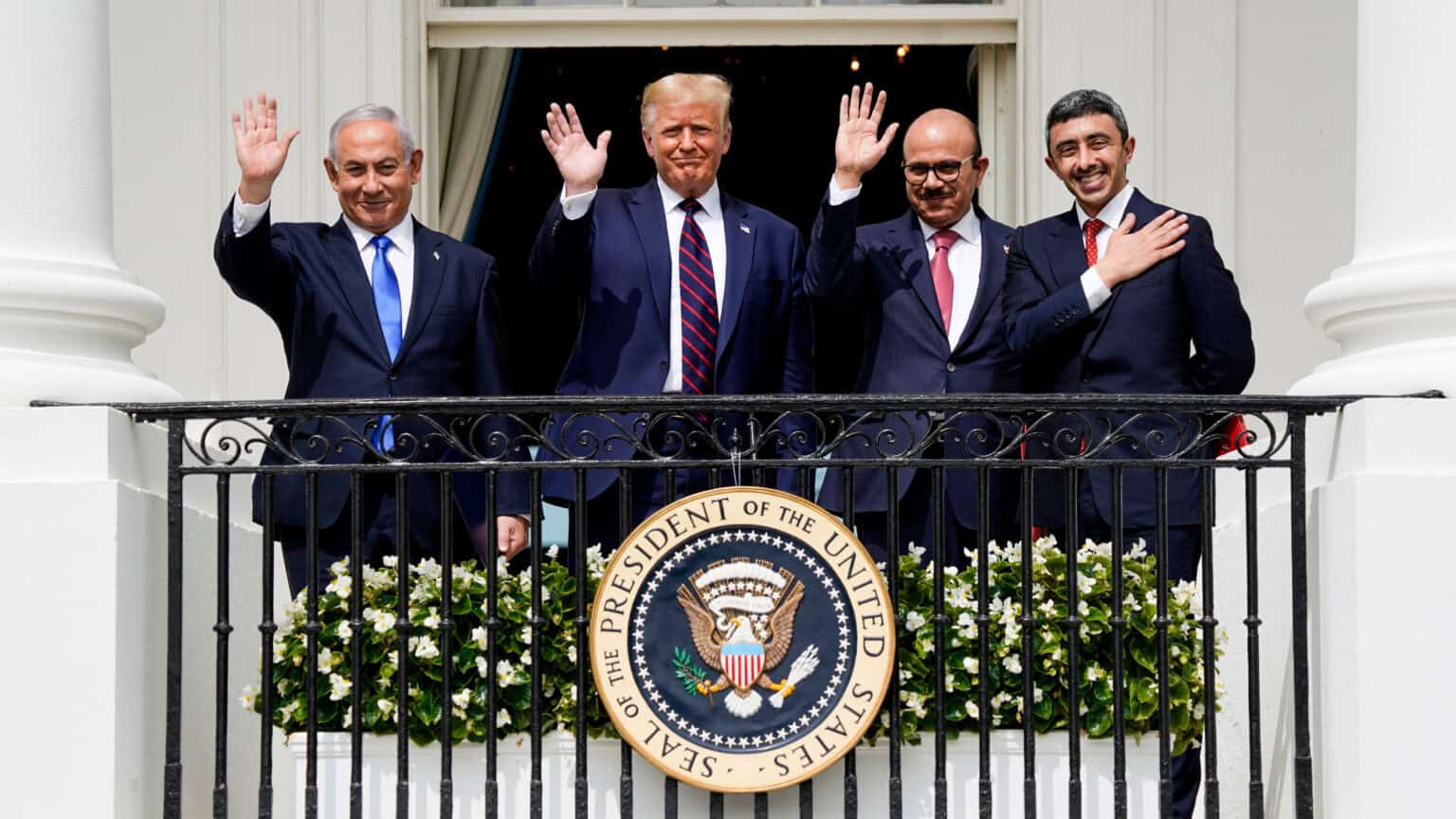
The Abraham Accords signing ceremony — a landmark moment in modern diplomacy between Israel and Arab nations.
The Abraham Accords, beginning in 2020, marked a historic breakthrough. Israel normalized relations with the United Arab Emirates, Bahrain, Morocco, and Sudan, with growing interest from others. Far from abstract dialogue, these agreements delivered tangible results:
Bilateral trade between Israel and the UAE alone reached billions of dollars, with growth spanning technology, defense, agriculture, water innovation, healthcare, and renewable energy.
Analyses suggest deeper integration could generate hundreds of thousands of new jobs across signatory nations, scaling to millions if more countries join.
Enhanced cooperation against common threats while opening diplomatic channels that reduce escalation risks across the region.
Direct flights, tourism, student exchanges, and business partnerships humanize former “others” and build durable people-to-people bonds.
The Abrahamic Family House: A Living Monument to Unity
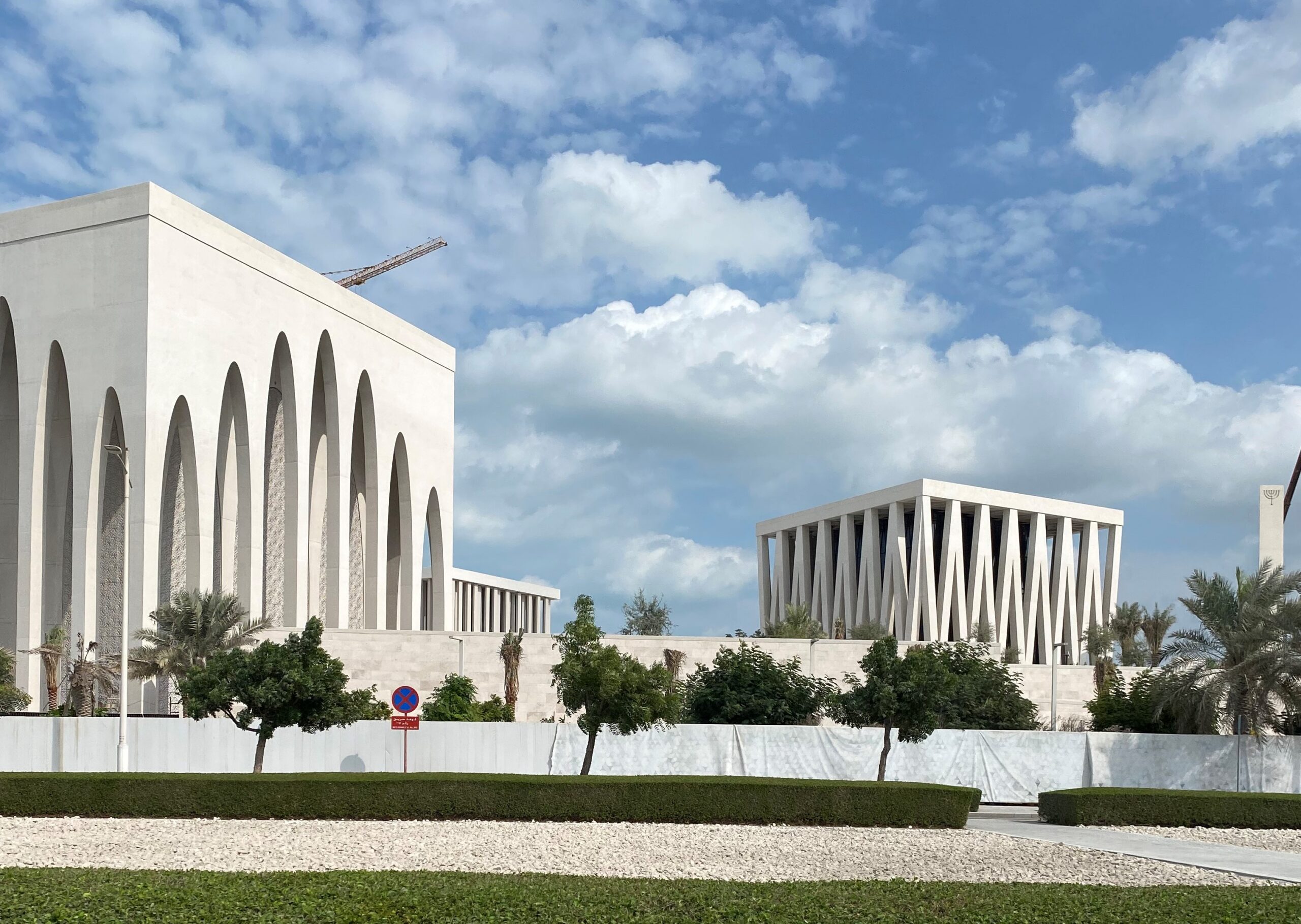
The Abrahamic Family House in Abu Dhabi — mosque, church, and synagogue united around a shared public square.
In Abu Dhabi stands one of the most beautiful expressions of this vision: the Abrahamic Family House. This stunning architectural complex houses three distinct houses of worship — the Imam Al-Tayeb Mosque, St. Francis Church, and Moses Ben Maimon Synagogue — arranged around a shared public square.
Inspired by the 2019 Document on Human Fraternity signed by Pope Francis and Grand Imam Ahmed Al-Tayeb, the Family House is not about blending religions into one. It preserves each faith’s integrity while creating space for genuine encounter, dialogue, education, and friendship.
It stands as a powerful symbol: different paths to the Divine, walking together in peace. The UAE’s leadership in tolerance has given the world a physical model of what the Abrahamic Movement aspires to achieve everywhere.
The Abrahamic Movement: From Symbol to Global Action
Building on these foundations, the Abrahamic Movement has emerged as a dynamic global initiative. It goes beyond government agreements to engage religious leaders, scholars, youth, and communities through high-level interfaith summits and declarations, educational programs highlighting shared heritage, grassroots people-to-people exchanges, and joint humanitarian and development projects.
Real-world examples already exist — interfaith marches for peace and human rights in Jerusalem and elsewhere show Jews, Christians, and Muslims standing shoulder-to-shoulder. These are not photo opportunities; they are the seeds of a different future.
Peace Through Shared Humanity
When we recognize each other as fellow children of Abraham, the dehumanization that fuels conflict loses power. Extremism on all sides thrives on narratives of irreconcilable enmity. The Abrahamic Movement dismantles those narratives with truth, relationship, and moral clarity.
In the Middle East and beyond, it complements diplomatic efforts by adding the spiritual and cultural dimension often missing from purely political approaches. It empowers moderates and gives young people an alternative to radical ideologies.
Development Rooted in Shared Values
Unity is not only about avoiding war — it actively creates prosperity. The shared ethical heritage of the Abrahamic faiths provides powerful motivation for joint action on humanity’s greatest development challenges:
A Practical Call to Action
The Abrahamic Movement will only succeed if ordinary people and leaders embrace it. Here’s how we can all contribute:
- Learn & Teach Study the shared stories and values. Encourage schools and places of worship to include balanced education about all Abrahamic traditions.
- Build Relationships Support or start local interfaith dialogue groups, joint service projects, and youth exchanges across faith communities.
- Amplify Moderate Voices Share stories of cooperation. Challenge hate speech from any quarter and elevate those who build rather than divide.
- Support Institutions Back initiatives like the Abrahamic Family House model, economic normalization where it serves peace, and organizations advancing interfaith understanding.
- Engage Leaders Urge political and religious authorities to prioritize dialogue, education reform, and people-to-people diplomacy as strategic imperatives.
The Choice Before Us
The challenges facing humanity — conflict, poverty, climate stress, and division — are immense. But so is our shared heritage. The Abrahamic Movement represents a return to our highest spiritual instincts: mercy over vengeance, knowledge over ignorance, unity over fragmentation, and hope over despair.
As descendants of Abraham — the friend of God who broke idols and welcomed strangers — we have both the spiritual resources and the moral obligation to build bridges. The future is not written yet. Together, as children of Abraham, we can write a chapter of hope, cooperation, and shared prosperity for generations to come.
What steps will you take today to advance Abrahamic unity in your community? Share this vision and join the conversation.
Khurram Ali Raza is a peace activist dedicated to advancing interfaith dialogue, coexistence, and development rooted in the shared Abrahamic heritage of Judaism, Christianity, and Islam. He writes for Rooted in Unity on faith, diplomacy, and the promise of people-to-people peace.