Love for the Sake of Love: A Lesson from Tisha b’Av
Love for the Sake of Love: A Lesson from Tisha b’Av
A rabbi reflects on baseless hatred, baseless love, and what she witnessed at an interfaith gathering of Muslim, Christian, and Jewish leaders in Washington, D.C.

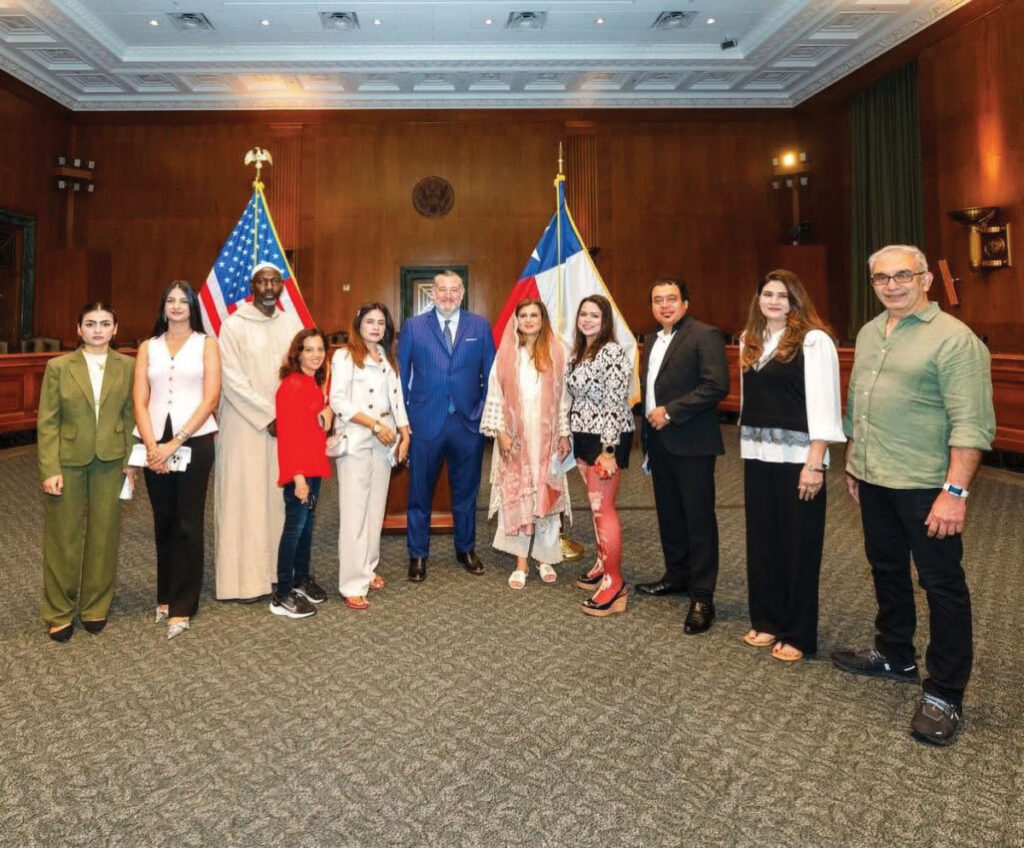
Last week, I moderated a panel of interfaith leaders fighting antisemitism and supporting Israel as part of the American Muslim and Multifaith Women’s Empowerment Council’s conference. The Talmud teaches that Jerusalem was destroyed “because of Kamtza and Bar Kamtza” (Gittin 55b). In the familiar telling, a host mistakenly invites his enemy, Bar Kamtza, instead of his friend, Kamtza, to a party. Humiliated by the mix-up, the host has Bar Kamtza thrown out despite his pleas and offers to pay for the meal, or even the entire event, just to be allowed to stay. The rabbis present watch and say nothing. Enraged by the public shame, Bar Kamtza goes to the Roman emperor and falsely reports that the Jews are rebelling, setting in motion the chain of events that leads to catastrophe.
What might have seemed like a passing slight became, in the eyes of our tradition, the root of a national tragedy. Not because of any single act of violence, but because laypeople and rabbis alike chose exclusion, callousness, and baseless hatred, sinat chinam, over love and empathy.
This story sits at the heart of the Three Weeks, the Nine Days, and Tisha b’Av, the period on the Jewish calendar devoted to mourning the destruction of the Temples and the long history of Jewish suffering. It is a season for confronting our own baseless hatred and the harm we contribute to the world.
Yet in a season of modern-day suffering and hatred directed at the Jewish people, that call to introspection can feel especially difficult to internalize. For those who struggle with it, what is there to say?
Rabbi Mel Gottlieb, a friend and colleague from Los Angeles who founded the interdenominational learning institute AJRCA, writes in his book “Torah Travels” that the tradition’s answer runs through Rav Abraham Isaac HaCohen Kook, the Chafetz Chaim, the Ibn Ezra, and the Netziv: the cure for baseless hatred is baseless love, ahavat chinam, a love pursued for its own sake rather than earned. Gottlieb cites Rav Kook’s teaching that love must extend first to all creation, then to all humanity, and that Israel’s calling is to embody that expansive love in concrete action, seeking the welfare of others regardless of difference. Kook warned that a narrow view of anything outside one’s own nation as impure is a form of spiritual darkness standing in the way of the dawn every sensitive soul awaits.
Last week’s panel, held as part of AMMWEC’s conference, gave that teaching a living form. I have known Anila Ali, the organization’s leader and a prominent voice in Muslim opposition to the anti-Israel boycott movement and to Zohran Mamdani, for more than twelve years. I joined the conference representing Gratz College and Neshama: Association of Jewish Chaplains, both cosponsors among many others.
This year’s gathering carried an added depth beyond its inaugural edition a year earlier. It came through direct testimony from Muslim, Christian, and multifaith leaders raised on baseless hatred toward Jews, some having once celebrated terrorists as martyrs, who now courageously stand in support of Israel and the Jewish people. Over the past six months to two and a half years, many had traveled to Israel on trips organized by AMMWEC, Anila Ali, Sheikh Musa Drammeh, Zebunnesa Zeba Zubair, and other interfaith leaders.
Who Spoke
- A social media influencer who was raised glorifying Muslim martyrs
- A Palestinian Christian priest who sought asylum in the U.S. after publicly supporting Israel
- An Arab journalist who described his surprise at being welcomed at Ben Gurion Airport despite his passport barring entry to Israelis
- Imam Sajjad Ahmed Tanoli, representing Pakistan, who spoke in Urdu on reviving the ethical legacy of the Prophet Abraham
What stayed with me most was the humility with which each speaker described a genuine change of heart and mind, moving from the baseless hatred that antisemitism instills to a love for Jews and Israel deep enough to bring them to Washington, D.C., at real personal risk, to testify to what they had discovered and what they now rejected. They stood as proud Muslims, Christians, Sikhs, and others embodying the words of Isaiah read on Shabbat Chazon: to learn to do good, seek justice, and defend the wronged.
Alongside the diverse Jews and Israelis in the room, I felt surrounded by ahavat chinam, a baseless love transformed from baseless hatred, the very shift that Rav Kook and the Talmud ask us to make during this season. Remarkably, speaker after speaker described that love as something drawn directly from Jewish tradition, inspired by the model of Abraham himself.
My hope is that knowing this love exists can make it easier to extend it, to other Jews and to all of humanity. It is the love we are called to cultivate during the Nine Days, and always. It is the antidote to the story of Bar Kamtza.
In 2026, few of us think to look for baseless love among our Muslim neighbors. I cannot think of a more striking example than the one I witnessed last week.