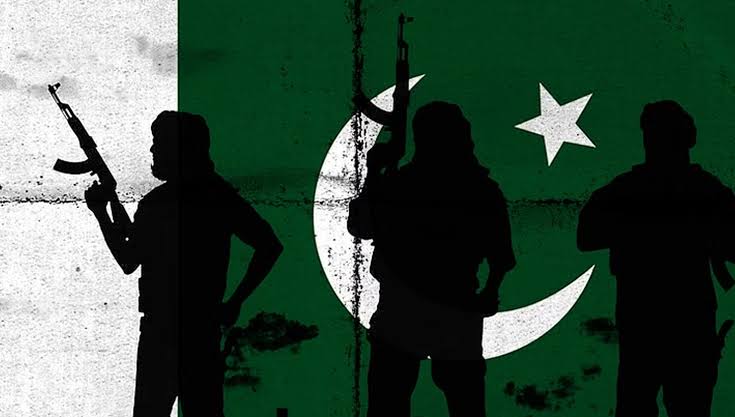
Why Pakistan Is Once Again at the Center of Terrorism Crisis
Why Pakistan Is Once Again at the Center of Terrorism Crisis
A coordinated militant attack in Hangu and a grim new ranking on the Global Terrorism Index expose a resurgence that the world can no longer treat as a footnote.
A coordinated militant attack on July 30, 2026, blamed on the Tehrik-e-Taliban Pakistan (TTP), struck the Khazina Banda checkpoint in Hangu, leaving 10 police personnel dead — including a Deputy Superintendent of Police — and injuring 29 others. According to Khyber Pakhtunkhwa Police, security forces killed 15 attackers during the clash, with authorities estimating that between 60 and 70 militants took part in the assault.
For years, Pakistanis lived with a grim routine: waking each morning wondering where the next bomb would explode. During the height of the country’s insurgency between 2007 and 2014, terrorist attacks became a fact of daily life. Suicide bombings targeted markets, mosques, schools, military installations, and government offices. Thousands of civilians, police officers, soldiers, journalists, and religious minorities lost their lives. For many Pakistanis, terrorism was no longer breaking news — it was simply life.
Today, the headlines are less frequent, but the threat has not disappeared.
The report attributes the sharp increase primarily to attacks carried out by the TTP and other Islamist militant groups, underscoring a dangerous resurgence rather than a historical footnote.
A Warning Reinforced in Washington
The assessment is reinforced by the U.S. Congressional Research Service. In a report prepared for Congress, the CRS notes that Pakistan has suffered considerably from domestic terrorism since 2003, with related fatalities peaking in 2009. While violence declined for several years, many analysts warned that the Afghan Taliban’s return to power in 2021 would reignite militancy across the region. According to the report, those fears have been realized: after five consecutive years of declining fatalities, terrorism-related deaths in Pakistan increased every year following the Taliban takeover, surging to 4,001 deaths in 2025 — the highest toll in eleven years.
“By many accounts, Pakistan currently is the country most impacted by terrorism.” — U.S. Congressional Research Service
That ranking should concern not only Pakistan but the international community. On March 25, 2026, the Congressional Research Service reminded lawmakers that Pakistan remains both a base of operations and a target for numerous militant organizations, noting that the United States has identified Pakistan as a hub for armed, non-state militant groups — twelve of the fifteen it lists are designated Foreign Terrorist Organizations under U.S. law, and most are animated by Islamist extremist ideology.
Key Facts
- 10 police personnel, including a DSP, killed in the July 30, 2026 Hangu checkpoint attack; 29 injured.
- Security forces reportedly killed 15 attackers among an estimated 60–70 militants involved.
- Pakistan ranks #1 on the Global Terrorism Index for the first time since the index began.
- Terrorism-related deaths in Pakistan reached 4,001 in 2025 — the highest in eleven years.
- 12 of 15 militant groups the U.S. links to Pakistan are designated Foreign Terrorist Organizations.
An Ideology That Adapted
These groups differ in their immediate objectives — global jihad, Afghanistan, Kashmir, sectarian violence, or domestic insurgency — but they are often connected by a common ideological worldview. For decades, billions of petrodollars helped export Islamist ideology far beyond the Middle East. Saudi Arabia financed religious institutions and movements across the Muslim world, while Iran built and armed its own network of ideological and militant proxies. Today, many Arab governments have banned or severely restricted organizations associated with political Islam and the Muslim Brotherhood within their own borders, recognizing the long-term threat they pose to social stability.
Ironically, some of the same countries that once exported these ideas now work to contain them at home. The ideology, however, did not disappear. It adapted.
While its most violent manifestations continue to fuel terrorist organizations such as ISIS, al-Qaeda, Hamas, and the TTP, softer forms of the same Islamist ideology have established themselves across Europe and North America through advocacy networks, educational institutions, online platforms, and political activism. These movements do not necessarily advocate violence, but they often promote a worldview that divides society into believers and non-believers, legitimizes Islamist grievances, and creates an environment in which extremism can more easily flourish.
Why Transparency Matters
Governments should investigate the sources of foreign funding flowing into organizations, educational programs, advocacy groups, and institutions that seek to shape public discourse in Western democracies. Such scrutiny should not target religious belief or peaceful civic engagement; it should ensure that foreign governments and ideological movements are not using financial influence to advance agendas that undermine democratic values, social cohesion, or national security.
“Transparency is not discrimination. It is responsible governance.” — Anila Ali
The challenge is particularly evident on university campuses, where debates about the Middle East increasingly intersect with questions of foreign influence, ideological activism, and the boundaries between legitimate political expression and organized radicalization.
Muslims Are the Greatest Victims
The overwhelming majority of Muslims reject terrorism. Indeed, Muslims have been its greatest victims. Pakistan itself demonstrates this reality. Extremist organizations have murdered fellow Muslims who refused to submit to their ideology. Mosques have been bombed. Sufi shrines attacked. Shia communities massacred. Sunni scholars assassinated. Soldiers, police officers, teachers, journalists, and ordinary families have paid the price.
Those who publicly oppose Islamist extremism often become targets themselves. Reformers, women’s rights advocates, minority-rights defenders, academics, and journalists routinely face threats simply for challenging extremist narratives from within their own communities.
Pakistan’s return to the top of the Global Terrorism Index is more than a troubling statistic. It is a warning that terrorism evolves, regenerates, and spreads wherever extremist ideology is allowed to grow unchecked. The world has spent more than two decades fighting terrorist organizations. It is time to devote the same seriousness to examining the ideas — and the funding — that keep producing them.
This is a condensed version of the original op-ed
Read Complete Article Here →
Anila Ali
Anila Ali is a civil rights advocate and educator who heads the American Muslim and Multifaith Women Empowerment Council (AMMWEC). Her work seeks to empower female leadership, promote religious freedom, and counter violent extremism.